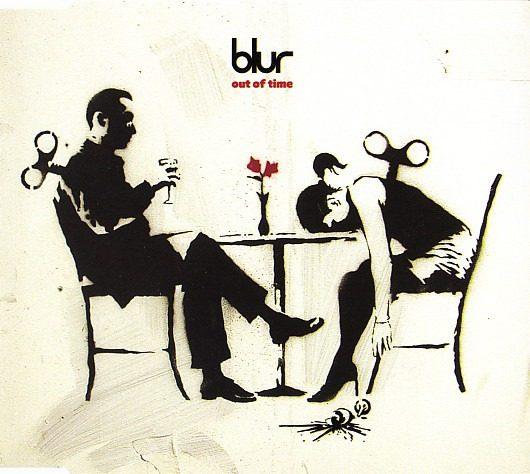

How often we assume the secret to a happy relationship is love. In fact the first ingredient is something else: respect. Two people can love each other deeply and, at the same time, hurt, insult, humiliate or even come to violence. When respect goes, love alone is not enough to build a healthy relationship. Respect does not make a couple perfect, but it is the minimum condition for love to grow.
Respect comes before love. Without respect, a relationship cannot work.
A healthy relationship rests on respect before anything else. When respect is missing:
- arguments become attacks;
- there are insults or humiliations;
- threats or blackmail appear;
- pushing, slapping or other physical violence occurs;
- fear replaces trust.
In these situations the problem is not a lack of love. It is the absence of the foundations a relationship requires.
Why is respect more important than love?
Respect is about how you choose to treat the other person, including when you are angry, disappointed or hurt. It is why a relationship can go through a crisis without ceasing to be healthy. But it cannot be healthy if respect goes.
Think of respect as a building's foundations. Nothing lasting can be built if what sits underneath the relationship is not the kind of respect capable of holding love.
Can you love someone and treat them badly?
Yes. And it is one of the hardest realities to accept. Many people think:
"If he really loved me, he couldn't do this."
Unfortunately that is not how it works. A person can feel strong love and, at the same time, insult, control, humiliate or attack a partner. Love on its own does not guarantee respectful behaviour.
Which is why "Does he love me?" is not the useful question. The more important one is: "How does he treat me?"
How do you recognise a relationship where respect is missing?
Disrespect almost never starts with physical violence. It usually appears well before. For example when:
- discussions always end in insults;
- one person continually humiliates the other;
- threats are used to get what someone wants;
- a partner is belittled or ridiculed;
- shouting is habitual during arguments;
- personal space is continually invaded;
- every conflict becomes a war to be won.
When these become habitual, the relationship gradually stops being a safe place.
When a couple stops arguing and starts fighting
Arguing is normal. In fact all healthy couples argue. The difference is not whether you argue. It is how.
In a healthy disagreement, the problem stays the problem. In a destructive one, the person becomes the problem. You move from:
"I don't agree with what you did."
to:
"You're a failure."
Or:
"You're worthless."
When that happens, nobody is trying to resolve a conflict any more. They are trying to win the battle, even at the cost of destroying the other person.
Violence does not begin with a slap
Many people picture violence only as physical assault. In reality it takes many forms. For instance:
- continual insults;
- humiliation;
- intimidation;
- shouting;
- threats;
- excessive control;
- emotional blackmail;
- shoving;
- breaking objects during an argument;
- preventing the other person from leaving during a fight.
These behaviours all communicate the same message: "Your worth and your boundaries are not being respected."
If there is violence
Where a relationship involves repeated verbal aggression, threats, intimidation or physical violence, the problem is not learning to communicate better. What comes first is re-establishing the minimum conditions of safety and respect. Without that foundation, there is nothing to build a healthy relationship on. Love may be present. On its own it is not enough.
If you are in this situation and you are in Italy, the national anti-violence and stalking helpline is 1522. It is free, available 24 hours a day, and operates in several languages including English — you do not need to speak Italian to call, and you do not need to have decided anything to talk to someone. In an emergency, the number is 112.
Why love is not enough
Because a relationship does not live on feelings alone. It needs safety first. A person should feel free to express what they think, feel and experience without being afraid of their partner's reaction. They should be able to feel heard even during a conflict. They should know that, whatever happens, their dignity will be respected. When that is missing, love risks turning into suffering.
Respect shows most clearly in an argument
It is easy to be kind when everything is going well. The quality of a relationship emerges in the difficult moments. Ask yourself:
- Can I express disagreement without being humiliated?
- Can we argue without insulting each other?
- Can I say no without being afraid?
- After a conflict, do we still feel like a team?
The answers say far more about the health of a relationship than any declaration of love.
Can respect be rebuilt?
It depends. If both people recognise the problem, take responsibility for their own behaviour and are genuinely motivated to change, a relationship can evolve. If one of them continues to deny, minimise or justify the violence, respect cannot be rebuilt. Because respect does not come from promises, nor from love declared. It comes from behaviour repeated over time.
The most important question is not "Does he love me?"
Many people stay trapped for years looking for an answer to that question. But it is often the wrong one. The question that genuinely changes the perspective is: "In this relationship, do I feel respected?"
Because a relationship can survive crises, exhaustion and even periods when love feels less intense. But it can rarely survive, in any healthy form, once respect, safety and mutual dignity are gone.
FAQ
Is respect more important than love? Yes. Love matters enormously, but without respect there is no foundation for a healthy, safe relationship.
Can you love someone and hurt them at the same time? Yes. Feeling love does not automatically prevent aggressive, controlling or humiliating behaviour. Which is why it matters to look at behaviour, not only at declared feelings.
Is a couple who argue a lot destined to separate? No. The problem is not arguing, but how conflicts are handled. Discussions can be constructive, or they can become destructive.
Are insults, shouting and humiliation a form of violence? Yes. When they become habitual, insults, shouting and humiliation constitute psychological violence and profoundly damage the quality of a relationship.
Can a relationship work without respect? No. Respect is the foundation of trust, safety and intimacy. Without those conditions, a relationship lacks what it needs to grow healthily.