ANXIETY DISORDERS
Anxiety and insomnia
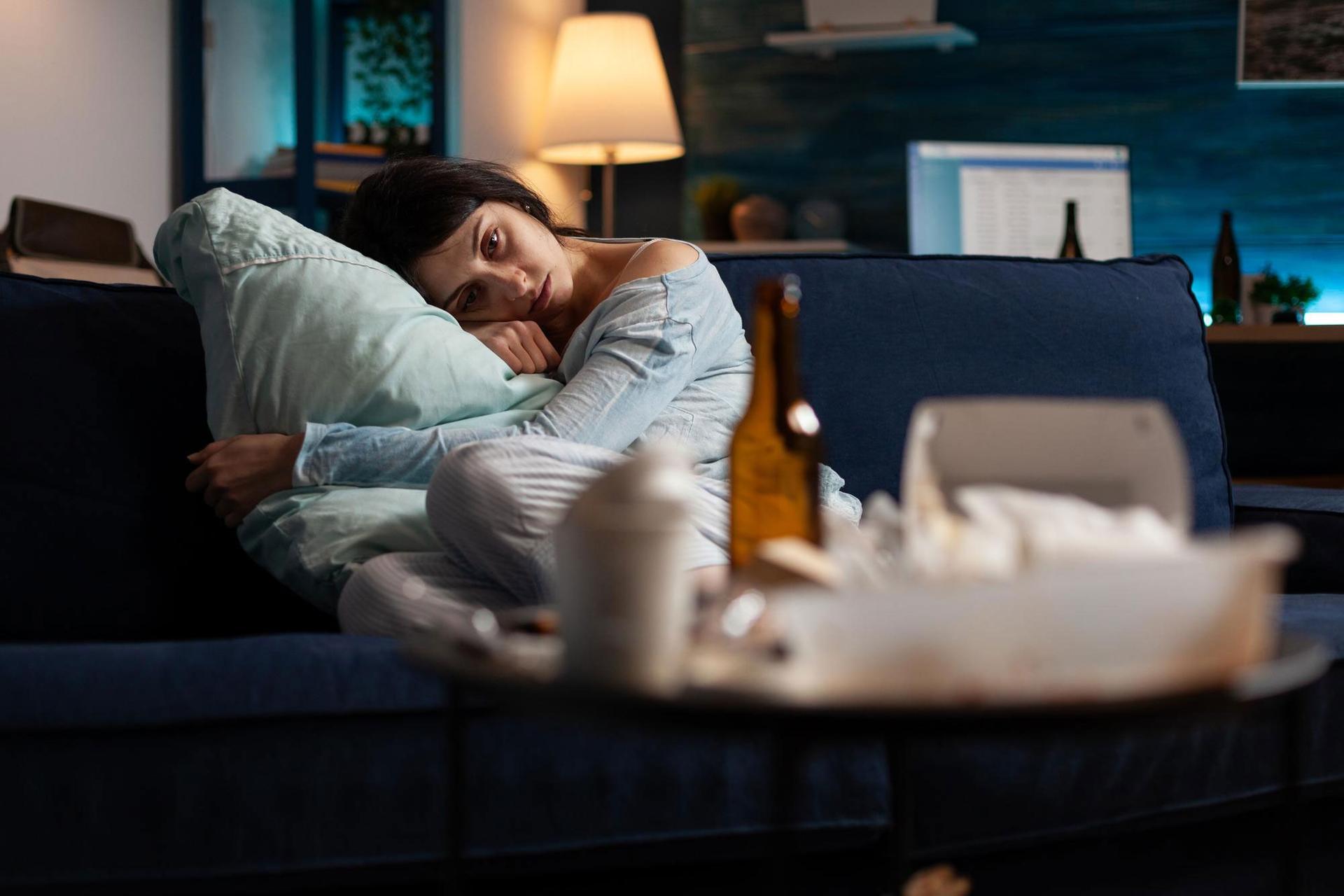
The body is exhausted. The head isn't, and it starts the moment the light goes off.
Even when I'm exhausted, my head never goes to sleep. The moment I turn off the light, the thoughts start.
Why the thoughts arrive at night
It isn't a coincidence that they begin when the light goes off.
During the day attention is occupied: there are things to do, messages to answer, noise. In the evening all of that stops, and for the first time in sixteen hours there's nothing filling the mind.
What was postponed arrives then. Not because the evening makes things worse, but because it's the first moment there's room to think them.
There's a physiological fact on top of that: in anxiety the level of activation stays high even when the body is tired. Tiredness and activation don't cancel each other out — you can have both, and that's exactly the sensation of being exhausted and unable to fall asleep.
The cycle: when sleeping becomes a performance
Anxiety-related insomnia maintains itself the way anxiety does generally: trying to control it makes it worse.
Sleep isn't a voluntary action. You can't decide to fall asleep, any more than you can decide to digest. It arrives when attention leaves the field.
The moment falling asleep becomes an objective — I have to sleep, tomorrow is heavy, it's already two — attention moves onto the outcome. And attention on the outcome is precisely what prevents the outcome.
From there the cycle: one night goes badly, the next night you go to bed worried about how it will go, and the worry produces the activation that keeps you awake.
Waking at four in the morning
One common form isn't about falling asleep but about waking: you come round at three or four with the thoughts already running, as though there had been no pause.
There's a reason everything looks worse at that hour. In the second half of the night the body prepares to wake: cortisol rises, temperature starts climbing, sleep is lighter. A thought that would carry normal weight by day arrives in an already-activated body, without any of the daytime context that would cut it down to size.
Decisions made at four in the morning are almost always wrong, and almost always feel exceptionally clear.
Why sleep hygiene alone isn't enough
The standard advice — regular hours, no screens, a cool room, no caffeine late — is correct and useful. But it addresses the conditions, not the mechanism.
If what keeps you awake is anxious activation and rumination, improving the conditions doesn't touch it. That's why many people arrive saying they've tried everything: they've tried everything at the level of habits, and the problem was at another level.
There's a paradoxical effect too: applying sleep rules with precision can itself become another form of control, and therefore another source of evening anxiety.
Sleep, anxiety and stress
The relationship runs both ways, which is what makes it hard to leave.
Anxiety makes sleep lighter and more broken. Insufficient sleep lowers the threshold at which the alarm fires the next day. The next day you're more reactive, more tired, less able to handle what comes — and you arrive at the evening more activated than before.
That's why sleep is often the first place anxiety shows, and one of the last to settle.
Insomnia and anxiety therapy in English in Milan and Monza
I'm an Italian psychologist and psychotherapist, registered with the Order of Psychologists of Lombardy, working in English and Italian, in two practices in Milan, in Monza, in Cernusco sul Naviglio, and online.
First of all: if the insomnia is persistent, medical assessment comes first. Sleep problems can have physical causes — sleep apnoea among them, which is common and often undiagnosed — and those need ruling out.
Where the picture is anxious activation, the work concerns three things: reducing the general level of activation, not only the evening's; interrupting rumination before it settles into shape; and taking away sleep's status as a performance to succeed at.
When it makes sense to ask for help
— Am I tired all day and awake at night?
— Do I go to bed worried about how the night will go?
— Do I wake at four with the thoughts already running?
— Have I tried the sleep rules without result?
Frequently asked questions
Because sleep hygiene addresses the conditions, not the mechanism. If what keeps you awake is anxious activation, improving habits doesn't touch it.
If the insomnia is persistent, yes. Sleep disorders can have physical causes that need ruling out — sleep apnoea in particular is common and frequently undiagnosed.
No, I'm not a medical doctor. If medication is already in place, or if it emerges that it might be worth considering, I work alongside your GP.

Dr. Giuseppe Iannone — Psychotherapist
FIRST STEP