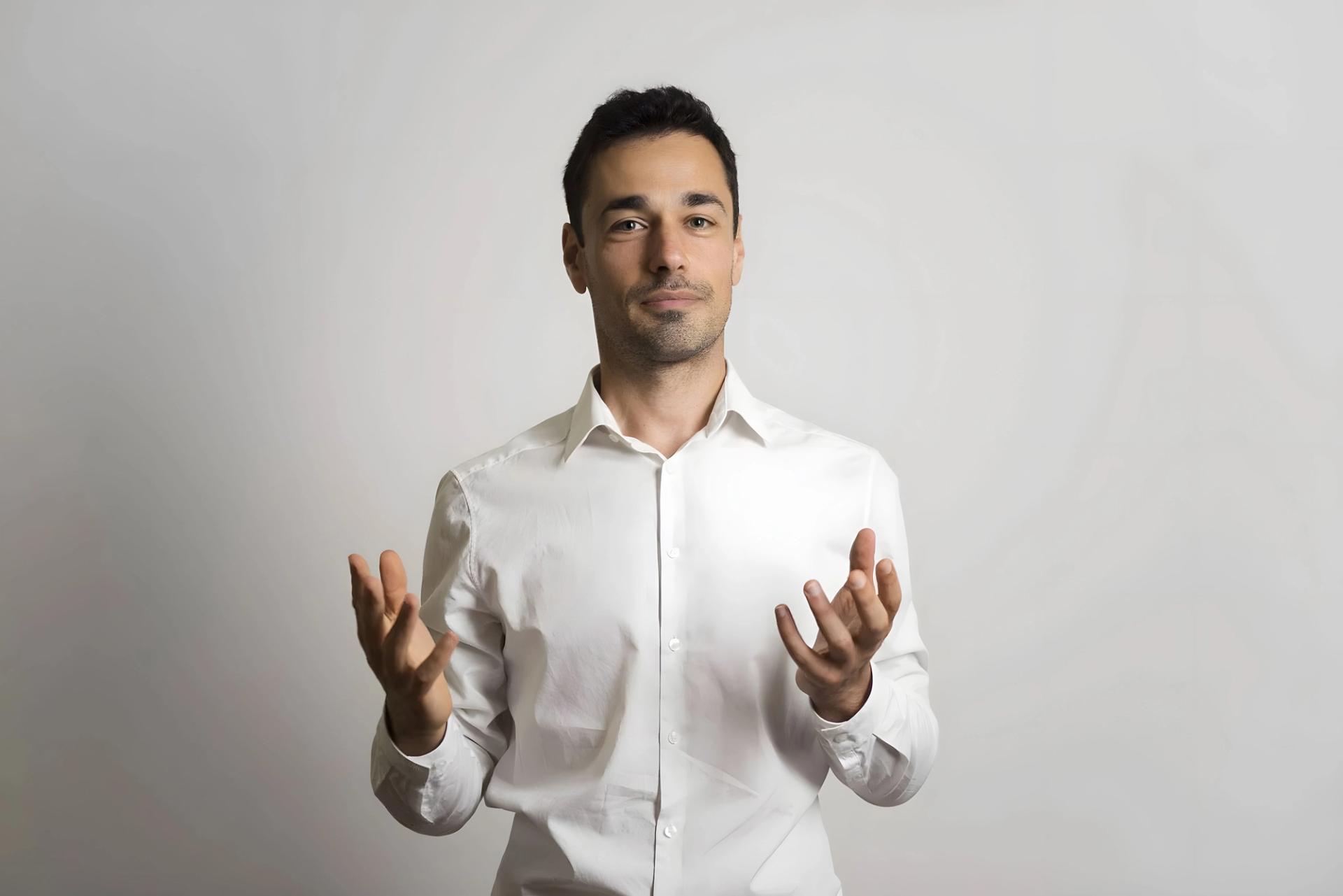
About me
I know anxiety first-hand.
Psychologist and psychotherapist. I work with anxiety and panic attacks — and I came to this by going through it.
- PSYCHOLOGISTS' REGISTERNo. 18949, Lombardy
- RESEARCHSeven published papers
- PRACTICESMilan · Monza · Cernusco
- LANGUAGESItalian and English
WHAT I WORK WITH
If you're here, it's probably one of these
I work with anxiety and panic attacks, and with the difficulties that build up around them: agoraphobia, claustrophobia, social anxiety, health worry, the insomnia that arrives when your head won't stop.
I also work with prolonged stress and burnout, with difficulties in relationships, with couples therapy, and with sexual difficulties — which in most cases have a recognisable anxiety component, even when it doesn't look that way.
And I work with trauma: the kind that has a date, and the kind that doesn't.
 Anxiety and anxiety disorders6 subtopics
 Panic attacks and agoraphobia
 Stress and burnout
 Difficulties in relationships
 Couples therapy
 Sexual difficulties
 Trauma and the body's memory
TRAINING AND CLINICAL EXPERIENCE
Eighteen years across clinical training, research and hospital wards.
Maastricht
UniversityCognitive and Clinical Neuroscience
PsyQ Clinic,
MaastrichtAnxiety Disorders Department
Milano-Bicocca
UniversityPsychology
IRCCS Policlinico
MaggiorePsychiatry ward
IRCCS Fatebenefratelli,
BresciaEpidemiological psychiatry
THE JOURNEY
The stops along the way
From Siena to Brescia, with a few stops along the way: the training, the first steps, the encounters that led me to this work.
Siena
THE BEGINNINGSomething I had no name forIt was 2001. I was studying Philology at the University for Foreigners and knew nothing about psychology. One day, during a lecture, my heart started racing out of nowhere: light head, short breath, the sense of being detached from my own body and from the room.
It was a panic attack — but I had no name for it then.
"From that day I started avoiding. The supermarket, the cinema, lifts, public transport. It had become my strategy."
Amsterdam
A NAMENaming it changed the directionAfter graduating I took a post teaching Italian language and culture in Amsterdam. By then the experience had returned several times, and it was there that I first asked a psychotherapist for help.
Giving a name and a meaning to what was happening to me changed the direction of my life: I decided to start my studies again and turn to psychology.

Maastricht
TRAINING AND RESEARCHCognitive and Clinical NeuroscienceI enrolled at university again, this time in Psychology, and completed my studies in Cognitive and Clinical Neuroscience at Maastricht, specialising in Psychopathology. Then a clinical placement in the Anxiety Disorders Department of the PsyQ clinic, where I ran psychoeducation groups.
An interest in research led me to a second placement, on stress and resilience, at the Mental Health School of Neuroscience.
"A laboratory one floor below ground, counting neurons in the hippocampus of mice under an optical microscope. I was trying to work out whether some mice are born better equipped than others to handle stress."
Milan
SPECIALISATIONPsychotherapy trainingBack in Italy I was awarded two two-year research grants on the physiological alterations of panic disorder, and completed the Specialisation Diploma in Cognitive-Neuropsychological Psychotherapy: four years.
During those years I did a twelve-month placement in the Psychiatry department of the IRCCS Policlinico Maggiore, with patients living with psychosis, bipolar disorder and personality disorders.
Brescia
CLINICAL RESEARCHEpidemiological psychiatryFor a year I worked as a researcher in the Department of Epidemiological Psychiatry at IRCCS Fatebenefratelli, where I published a meta-analysis on the acceptability of mood measurement instruments in patients with depression.
In the same period I ran training days on the use of a neuropsychological test battery, and administered tests in forensic psychiatry settings.
Today
TODAYI'm not a jack-of-all-tradesI work in Italian and in English. Over the years I've worked with people who came to Milan from all over the world: studying and living abroad taught me how much it matters to be able to describe yourself in the language you feel at home in.
Today I work exclusively with anxiety and panic, and the difficulties that come with them. I see people in Milan, Monza, Cernusco sul Naviglio and online.
"I'm not a jack-of-all-trades — and I consider that a strength."


THE JOURNEY
The stops along the way
From Siena to Brescia, with a few stops along the way: the training, the first steps, the encounters that led me to this work.
Siena
It was 2001. I was studying Philology at the University for Foreigners and knew nothing about psychology. One day, during a lecture, my heart started racing out of nowhere: light head, short breath, the sense of being detached from my own body and from the room.
It was a panic attack — but I had no name for it then.
"From that day I started avoiding. The supermarket, the cinema, lifts, public transport. It had become my strategy."
Amsterdam
After graduating I took a post teaching Italian language and culture in Amsterdam. By then the experience had returned several times, and it was there that I first asked a psychotherapist for help.
Giving a name and a meaning to what was happening to me changed the direction of my life: I decided to start my studies again and turn to psychology.
Maastricht
I enrolled at university again, this time in Psychology, and completed my studies in Cognitive and Clinical Neuroscience at Maastricht, specialising in Psychopathology. Then a clinical placement in the Anxiety Disorders Department of the PsyQ clinic, where I ran psychoeducation groups.
An interest in research led me to a second placement, on stress and resilience, at the Mental Health School of Neuroscience.
"A laboratory one floor below ground, counting neurons in the hippocampus of mice under an optical microscope. I was trying to work out whether some mice are born better equipped than others to handle stress."
Milan
Back in Italy I was awarded two two-year research grants on the physiological alterations of panic disorder, and completed the Specialisation Diploma in Cognitive-Neuropsychological Psychotherapy: four years.
During those years I did a twelve-month placement in the Psychiatry department of the IRCCS Policlinico Maggiore, with patients living with psychosis, bipolar disorder and personality disorders.
Brescia
For a year I worked as a researcher in the Department of Epidemiological Psychiatry at IRCCS Fatebenefratelli, where I published a meta-analysis on the acceptability of mood measurement instruments in patients with depression.
In the same period I ran training days on the use of a neuropsychological test battery, and administered tests in forensic psychiatry settings.
Today
I work in Italian and in English. Over the years I've worked with people who came to Milan from all over the world: studying and living abroad taught me how much it matters to be able to describe yourself in the language you feel at home in.
Today I work exclusively with anxiety and panic, and the difficulties that come with them. I see people in Milan, Monza, Cernusco sul Naviglio and online.
"I'm not a jack-of-all-trades — and I consider that a strength."

"Breathing doesn't follow the fear. It precedes it."
THE BODY
The body arrives before the thought
In anxiety the body arrives before the thought. Breathing, attention to bodily signals, how you respond to a racing heart — these can be worked on directly, and they're often where we start.
It isn't an accessory to the work. It's why I studied neuroscience before becoming a psychotherapist.
"Switching the light off doesn't fix the fault."
SYMPTOMS
A warning light on the dashboard
You could cut the wire that carries the signal and keep driving. You'd have the illusion that there was no fault.
I have nothing against medication: in many cases it's a valuable ally, particularly alongside psychotherapy. But when symptoms are only switched off, the question that produced them goes unanswered.
In psychotherapy we read what the symptoms mean, and place them in a history — yours.
Qualifications and training
The documents my work is built on
Each qualification can be viewed in full. Some personal details have been redacted; dates, institutions and signatures remain as on the original.
Ordine degli Psicologi della Lombardia n.18949

Recognising yourself in a list isn't a diagnosis.
It's where you start to understand what's happening, and what can be done with it.
HOW I WORK
PUBLISHED RESEARCH
Published work
Two of these are freely available online.
De Girolamo G., Iannone G., et al.
Depression and Anxiety, 2020
Are anxiety disorders associated with accelerated aging? A focus on neuroprogression
Perna G., Iannone G., Alciati A., Caldirola D.
Neural Plasticity, 2016
Different effects of cigarette smoking on neuropsychological performance in psychiatric disorders
Caldirola D., Iannone G., Diaferia G., Perna G.
In: The Neuropathology of Drug Addictions and Substance Misuse, a cura di Preedy V. — Academic Press, 2015
The neurobiology of Generalized Anxiety Disorder
Perna G., Iannone G., Torti T., Cavedini P.
In: New Perspectives on Generalized Anxiety Disorder, a cura di Guglielmo G., Janiri L., Pozzi G. — Nova Science Publishers, 2014
L'impatto dei traumi infantili sulle funzioni neuropsicologiche. Uno studio in pazienti con Disturbo Bipolare
Iannone G., Caldirola D., Di Chiaro V., Daccò S., Micieli W., Perna G.
19° Congresso della Società Italiana di Psicopatologia (SOPSI), Milano
La relazione tra trauma infantile, genere, età ed esordio di malattia in una popolazione psichiatrica adulta
Perna G., Sangiorgio E., Pozzi V., Iannone G., Caldirola D.
18° Congresso della Società Italiana di Psicopatologia (SOPSI), Torino, 2014
Associazione tra emotività espressa, trauma infantile e temperamento in pazienti con disturbo ossessivo-compulsivo
Vanni G., Piccinni M., Borriello G., Iannone G., Cavedini P., Perna G.
18° Congresso della Società Italiana di Psicopatologia (SOPSI), Torino, 2014
De Girolamo G., Iannone G., et al.
Depression and Anxiety, 2020
Are anxiety disorders associated with accelerated aging? A focus on neuroprogression
Perna G., Iannone G., Alciati A., Caldirola D.
Neural Plasticity, 2016
Different effects of cigarette smoking on neuropsychological performance in psychiatric disorders
Caldirola D., Iannone G., Diaferia G., Perna G.
In: The Neuropathology of Drug Addictions and Substance Misuse, a cura di Preedy V. — Academic Press, 2015
The neurobiology of Generalized Anxiety Disorder
Perna G., Iannone G., Torti T., Cavedini P.
In: New Perspectives on Generalized Anxiety Disorder, a cura di Guglielmo G., Janiri L., Pozzi G. — Nova Science Publishers, 2014
L'impatto dei traumi infantili sulle funzioni neuropsicologiche. Uno studio in pazienti con Disturbo Bipolare
Iannone G., Caldirola D., Di Chiaro V., Daccò S., Micieli W., Perna G.
19° Congresso della Società Italiana di Psicopatologia (SOPSI), Milano
La relazione tra trauma infantile, genere, età ed esordio di malattia in una popolazione psichiatrica adulta
Perna G., Sangiorgio E., Pozzi V., Iannone G., Caldirola D.
18° Congresso della Società Italiana di Psicopatologia (SOPSI), Torino, 2014
Associazione tra emotività espressa, trauma infantile e temperamento in pazienti con disturbo ossessivo-compulsivo
Vanni G., Piccinni M., Borriello G., Iannone G., Cavedini P., Perna G.
18° Congresso della Società Italiana di Psicopatologia (SOPSI), Torino, 2014
HOW I WORK
What actually happens
Many people arrive without knowing what to expect. That's reasonable: psychotherapy gets talked about a great deal and described very little.
The first session
Forty-five minutes — sixty if you come as a couple. You tell me what's happening — how long, in what situations, what you've already tried. It isn't a test and it doesn't require having worked anything out beforehand: I ask the questions.
It's there for two things: to understand what we're dealing with, and to work out together whether and how to continue. It doesn't commit you to carrying on.
The sessions after that
The first two or three sessions are close together: weekly, or about ten days apart. Then the rhythm opens out, usually one session every two or three weeks.
The work runs on two tracks: understanding the mechanism — not anxiety in general, but yours — and rebuilding room where the field had narrowed.
Between sessions
The work doesn't end in the room. Between sessions there may be something to do: concrete exercises, reading, or noting down what happens — when the anxiety arrives, in which situations, what precedes it.
Self-monitoring in particular serves one precise purpose: anxiety is badly remembered. After a few days the general impression remains and the details are gone, and the details are exactly what the work is about.
It isn't homework to hand in. It's material we bring to the next session.
Working in English
I'm Italian, and I work in both English and Italian. A large part of the people I see in English didn't grow up in Italy: they came for work, for a partner, for study, or for a year that turned into several.
Describing anxiety is hard enough in your own language. If Italian isn't the language you'd choose for it, that matters, and it's worth saying at the start.
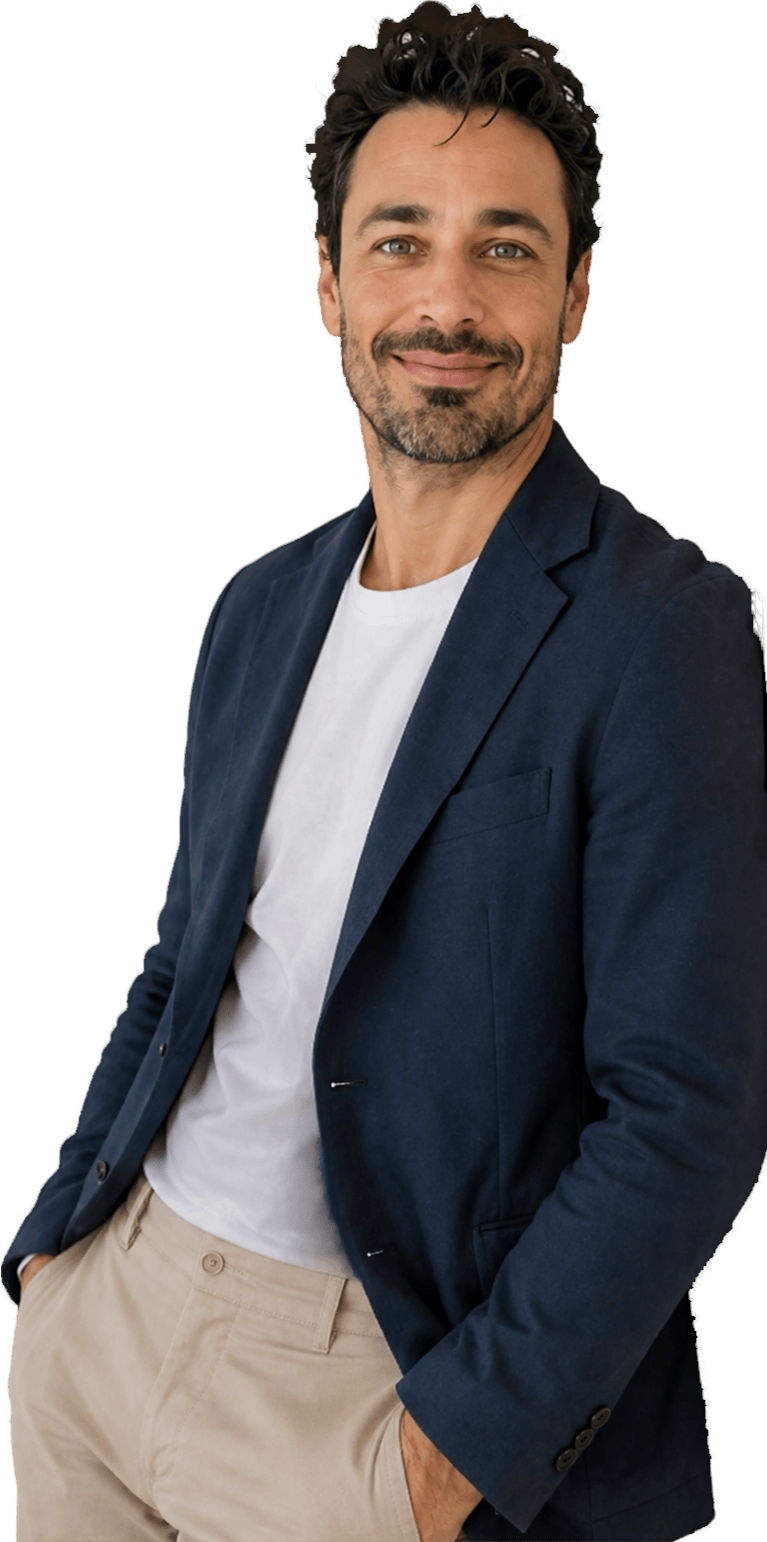
Dr. Giuseppe Iannone — Psychotherapist
FIRST STEP